
Unveiling Precision Thermal Vision
Revolutionary MWIR/LWIR Imaging
Overcoming Thermal Imaging Challenges with Advanced MWIR/LWIR Technology
The Challenge
In industrial, scientific, and security applications, precise thermal imaging is essential for accurate detection and analysis. However, many existing systems struggle with limited sensitivity, the need for frequent manual calibration, and insufficient reliability in demanding environments. Ensuring high-resolution imaging across both MWIR (3–5 µm) and LWIR (8–12 µm) wavelength bands while maintaining a compact and lightweight design remains a significant challenge.
Our Solution
This next-generation MWIR/LWIR sensor system addresses these issues with advanced sensor technology, offering both uncooled and cooled sensor options for high-resolution thermal imaging. With a NETD of <50 mK, it provides exceptional sensitivity for precise thermal detection.
Equipped with THIRFLIS-based cooling technology and a mechanical shutter for radiation protection, the system ensures stable performance. Its integrated optical autocompensation technique eliminates the need for manual calibration, delivering consistently high-quality imaging.
Designed for long-term reliability (>25,000 hours MTTF), this compact (114 x 114 x 110 mm) and lightweight (400 g) sensor is built to perform in demanding environments, making it a powerful solution for modern thermal imaging challenges.
Join the Future of Thermal Imaging
We are shaping the next revolution in thermal imaging technology. Now is the time to be part of this breakthrough. Contact us today to explore investment opportunities and drive innovation forward.


Dimensions: 200 mm x 130 mm x 78 mm
Tentative specifications
MWIR
| Characteristic | Value |
|---|---|
|
Wavelength band |
3 µm – 5 µm (tuneable) |
|
NETD [K] @ F/2, 25°C, 25 Hz |
< 50 mK |
|
Cooler technology |
TEC on laser diode, TEC on THIRFLIS-cell |
|
Pixel size |
3 µm x 3 µm |
|
Number of pixels (H x V)
(including reference image) |
1280 x 720 at 25 fps |
|
Dimensions (H x W x L) (uncooled)
(without lens objective) |
114 mm x 114 mm x 110 mm |
|
MTTF (uncooled) |
> 25.000 h |
|
Mechanical shutter |
Yes, to protect THIRFLIS-cell from very high radiation fluxes (temperature triggered) |
|
Non-uniformity correction (NUC) |
optical autocompensation technique |
|
Mass |
400 g |
|
Power |
30 W (24 VDC) (uncooled) |
|
Video interface |
SDI |
LWIR
| Characteristic | Value |
|---|---|
|
Wavelength band |
8 µm – 12 µm (tuneable) |
|
NETD [K] @ F/2, 25°C, 25 Hz |
< 50 mK |
|
Cooler technology |
TEC on laser diode, TEC on THIRFLIS-cell |
|
Pixel size |
3 µm x 3 µm |
|
Number of pixels (H x V)
(including reference image) |
1280 x 720 at 25 fps |
|
Dimensions (H x W x L) (uncooled)
(without lens objective) |
114 mm x 114 mm x 110 mm |
|
MTTF (uncooled) |
> 25.000 h |
|
Mechanical shutter |
Yes, to protect THIRFLIS-cell from very high radiation fluxes (temperature triggered) |
|
Non-uniformity correction (NUC) |
optical autocompensation technique |
|
Mass |
400 g |
|
Power |
30 W (24 VDC) (uncooled) |
|
Video interface |
SDI |
Thermal Resolution & Validation
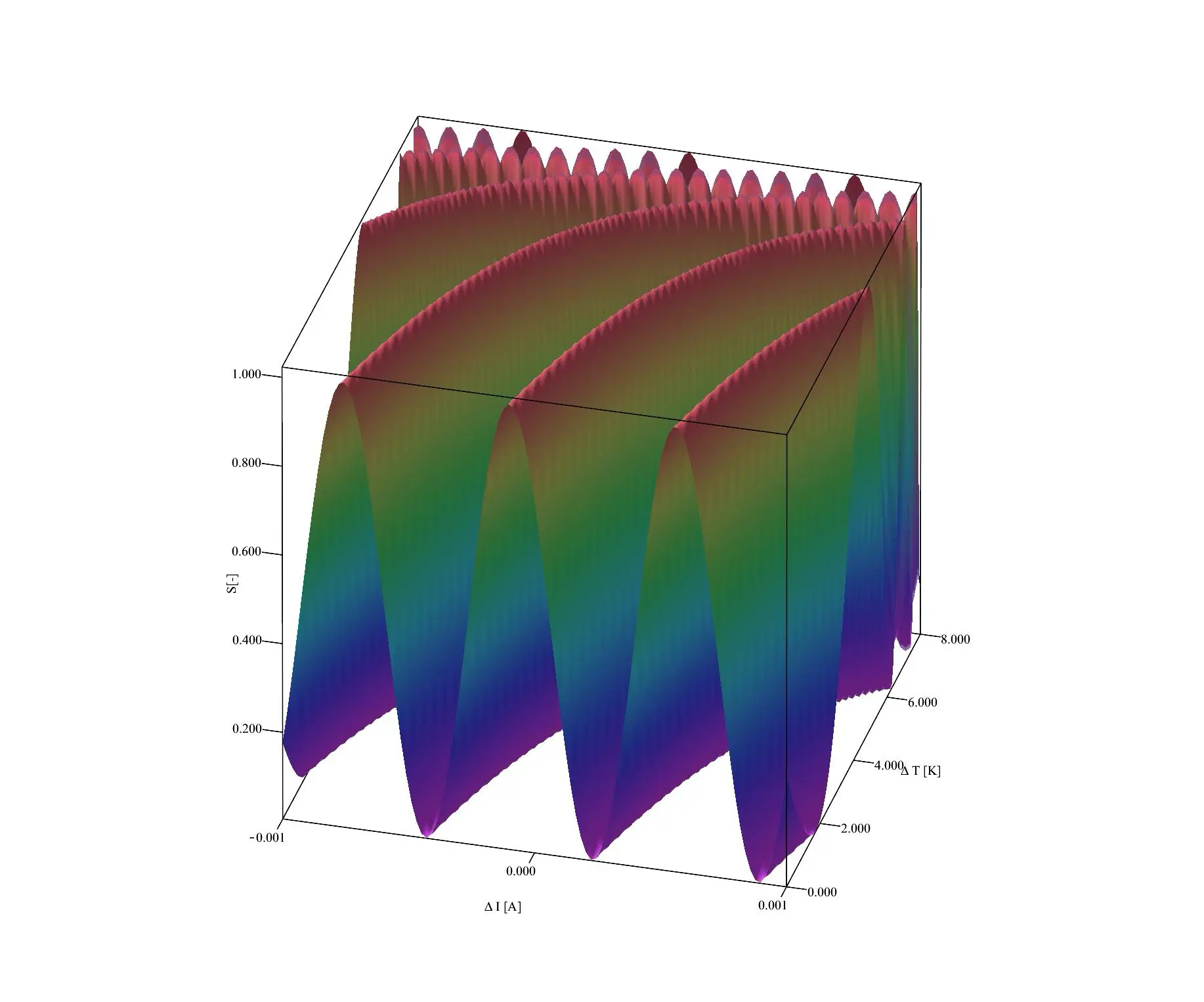
Simulation of the normalized signal of a THIRFLIS pixel as function of the optical readout parameter ΔI (injection current of laser diode) and change of the voxel temperature ΔT in the transformation layer with respect to the TEC temperature of 20 °C. The normalized signal S has a 10-bit resolution. Number of pixels of the CMOS sensor in the THIRFLIS TRL7 prototype is 2048 (H) x 2048 (H) with pixel pitch of 5.5 micron. THIRFLIS TRL7 prototype expected by end December 2025.
TECHNICAL RESEARCH CENTRE OF FINLAND (VTT) will characterize experimentally the THIRFLIS invention in the PHOTONHUB EUROPE Innovation Project No. 101016665, under supervision by VRIJE UNIVERSITEIT BRUSSEL (VUB).
Cooled operation of the THIRFLIS transformation layer is possible after selection of the appropriate transformation layer material (solid, liquid, gas, colloid, polymer, liquid crystal…) and cold finger temperature.
The patent

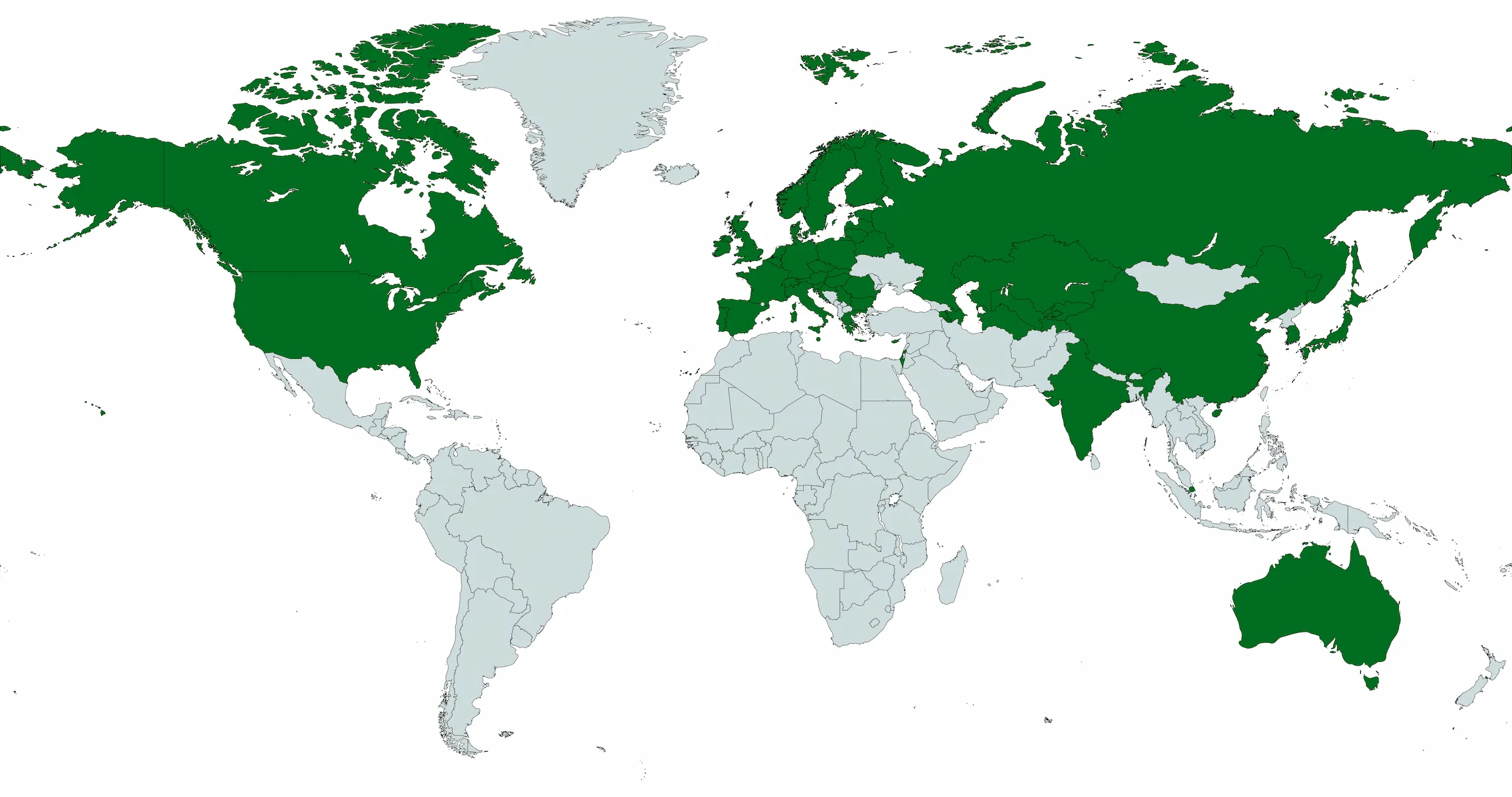
Patent is granted in
- Japan
- Eurasia
- Europe
- China
- Israel
- South-Korea
- Singapore
- USA
- Australia
- India
Patent is pending in
- Canada
Frequently asked questions
The THIRFLIS system is a next-generation thermal imaging sensor designed for high-precision industrial, scientific, and security applications. It operates in both MWIR (3 to 5 µm) and LWIR (8 to 12 µm) wavelength bands with tuneable spectral capabilities. The system combines advanced sensor architecture with THIRFLIS-based cooling technology to deliver high-resolution thermal imaging with exceptional sensitivity and long-term reliability.
The system achieves a NETD (Noise Equivalent Temperature Difference) of less than 50 mK at F/2, 25°C, 25 Hz. This enables detection of very small temperature differences in demanding environments such as industrial inspection, research, and security monitoring. A 1280 by 720 resolution at 25 fps supports detailed and stable thermal imagery.
THIRFLIS integrates an optical autocompensation technique for non-uniformity correction (NUC). This helps maintain consistent image quality without frequent manual calibration, reducing downtime and simplifying operation.
Yes. The system is designed for demanding use cases and long operating lifetimes, with an MTTF exceeding 25,000 hours in uncooled operation. A temperature-triggered mechanical shutter helps protect the THIRFLIS transformation layer from high radiation flux. Its compact form factor (114 x 114 x 110 mm) and low weight (400 g) support integration into embedded and mobile platforms.
Both MWIR and LWIR configurations offer tuneable wavelength bands (3 to 5 µm for MWIR, 8 to 12 µm for LWIR), NETD under 50 mK, pixel size of 3 µm by 3 µm, and 1280 by 720 at 25 fps. Uncooled operation is 30 W at 24 VDC, with SDI video output. The system includes optical autocompensation NUC and a mechanical shutter for protection.
THIRFLIS is at TRL7 status with prototype validation ongoing. Experimental characterization is carried out by VTT within the PHOTONHUB EUROPE Innovation Project, under supervision by Vrije Universiteit Brussel (VUB). Patents are granted in multiple regions including Europe, USA, Japan, China, and more, with additional protection pending in Canada.
Special thanks
We thank the company AirBorn Inc. for supporting our activities and for manufacturing the connectors of the THIRFLIS prototype free of charge.